AI Voice vs Human Voiceover: Knowing When It Matters
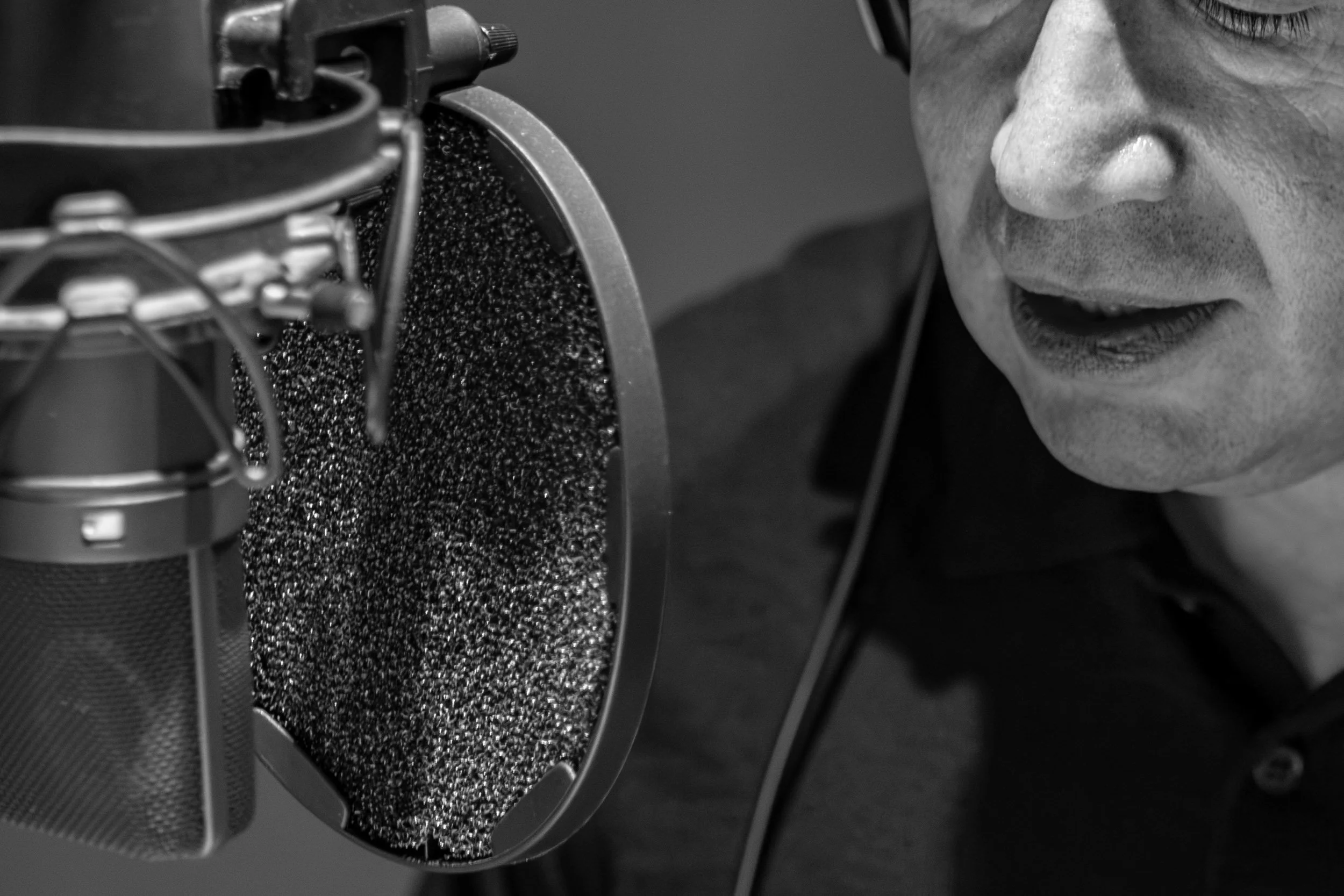
There's an honest version of this conversation and a defensive one. The honest version starts here: AI voice tools have improved dramatically, and for some applications they are genuinely good enough. If you need a placeholder voice for an internal training video, a read for a rough cut, or a low-stakes piece of content with a short shelf life, a synthetic voice can save you time and budget.
That's the honest version.
The defensive version is where some in this industry go wrong: dismissing AI voice entirely, pretending it doesn't exist, treating anyone who asks about it as though they're trying to cut corners. That's not a useful position for a client who's trying to make a real decision.
So here's what we actually think, after more than 25 years of working with voice talent.
What AI voice is genuinely useful for
Synthetic voice has found its natural home, and it's worth naming it clearly.
Internal content, where the audience has no emotional relationship with the brand voice. Automated customer service systems, where consistency and speed matter more than warmth. Long-form content where a human read would take multiple sessions. Rapid localisation across dozens of languages at a budget that makes human recording unfeasible.
In these contexts, AI voice is a rational choice. It's consistent, it's scalable, and it doesn't need a 9am studio session.
Where it falls short, and why that gap matters
The gap between AI voice and human voice isn't technical. It's not about audio quality or pronunciation. Modern AI voice tools can produce clean, broadcast-ready audio. The gap is interpretive, and it's significant.
A human voice artist brings something to a script that doesn't exist in any training dataset: genuine understanding of what a line is trying to do. The emphasis isn't placed correctly because an algorithm calculated that it should be. It's placed correctly because a person read the script, understood the intent behind it, and made a choice.
That might sound abstract. It isn't. Listen to an AI voice read a line that has genuine irony in it, or a line where the emotion should be restrained rather than expressive. Then listen to a skilled voice artist do the same. The difference is not subtle.
Pace is the other one. Not tempo. AI can vary tempo. Pace in the sense of knowing when to hold a beat, when to let silence do the work, when to ride over a comma rather than honouring it. That's interpretive intelligence, and it comes from a combination of craft and experience that doesn't exist in a language model.
The thing that can't be replicated
We've been doing voiceover sessions for a long time. And the thing clients consistently underestimate, until they've experienced it, is how much the session itself produces.
A good voiceover session is a creative conversation. The voice artist brings ideas. The director shapes the performance in real time, responding to what the talent is doing. The client or agency creative in the room (or on Source Connect) hears something unexpected in take three and realises the script actually needs to go a different way. That back-and-forth produces something the brief didn't know it needed.
No AI workflow has that. You send a script, you get a file back. What you put in is what you get out. There's no moment of collaborative discovery, no take that surprises you, no performance that opens up a new direction.
For work that matters, for campaigns that represent a brand, for content that's going to be heard thousands or millions of times, that collaborative process isn't a luxury. It's where the quality comes from.
The practical question: which projects need which approach?
Rather than a blanket position, here's how we'd actually think through it.
Use AI voice when:
The content is internal or low-stakes, with a short lifespan
You need rapid turnaround across a very high volume of assets
The voice is functional rather than expressive: a read, not a performance
Budget doesn't support a recording session and the project doesn't require one
Use a human voiceover when:
The work is going to be heard more than once by the same audience
The brand voice is a distinctive asset and consistency of character matters
The script requires genuine interpretation: humour, emotion, restraint, authority
You're producing something that represents the brand at a significant level
You want the session itself to be part of the creative process
The honest summary is that AI voice has earned a place in certain workflows, and pretending otherwise would be wrong. But the assumption that it's a drop-in replacement for professional voiceover, for anything where the voice is doing real creative work, consistently produces worse results than clients expect. If you're at the point of choosing a voice, our voice artist roster is a good place to start.
What we do
At Red Facilities we've been working with voice talent for more than 25 years. Our sessions are run by our exceptional team, who have directed voiceover for broadcast, advertising and film across that entire time. That experience is in the room on every session, whether you're with us in Leith or dialling in from anywhere in the world.
If you're weighing up a project and want an honest conversation about which approach makes sense, we're happy to talk it through. Get in touch.
Frequently Asked Questions
Is AI voice good enough for professional use?
It depends entirely on what "professional use" means for your project. For internal communications, rough cuts, placeholder reads, or high-volume content with a short lifespan, AI voice is often good enough. For anything where the voice is representing a brand to an external audience, or where interpretation and nuance matter, the gap between AI voice and a skilled human voice artist is still significant.
Can AI voice match the quality of a recording studio?
In terms of raw audio quality, yes. Modern AI voice tools produce clean, broadcast-ready audio. The quality gap isn't technical. It's in interpretation, emotional range, and the ability to respond to direction in real time. Those things don't exist in a synthetic voice, regardless of how good the audio processing is.
Will AI voice replace human voiceover artists?
For some categories of work, it already has. For the work that matters most to agencies and brands, we don't think so. The creative value of a skilled voice artist isn't just the read. It's the performance, the judgment, and the collaborative process that surrounds it. That's not something a language model can replicate, and it's not something clients stop valuing once they've experienced it properly.
How do I know which approach is right for my project?
The simplest test is this: will the audience hear this more than once, and does the brand relationship depend on how it sounds? If the answer to either is yes, it's worth using a human voice. If it's a functional piece of content with a limited audience and a short lifespan, AI voice may be a reasonable choice.
Does using AI voice save money in the long run?
Sometimes, and sometimes not. AI voice removes session costs, but it also removes the flexibility, the options, and the creative upside that a good session produces. Work that has to be redone because the performance wasn't right, or that underperforms because the voice didn't connect, has a cost too. For campaigns and content that matter, the investment in a proper recording session consistently pays for itself.
Can I use AI voice for a placeholder and then replace it with a human read?
Yes, and this is a legitimate use of AI voice. A synthetic placeholder can help you lock picture and get approvals before committing to a studio session. Just be aware that a real performance may take the creative in a different direction, and often doesn’t leave the same room to breathe that a voice artist needs, so try not to over-edit to the AI read before the human session.
Written by Max Howarth
Max is co-founder of Red Facilities. He came to voiceover and audio post-production from the client side, and writes about the industry from that perspective. That background gives him a clear view of what agencies and brands actually need from a voice session.