Podcast Audio Quality: What Your Listeners Actually Notice
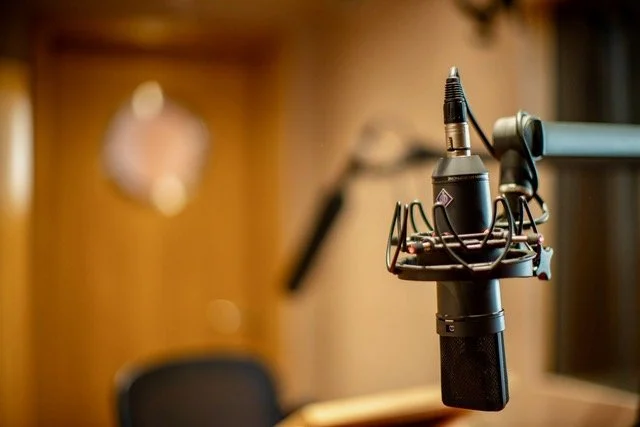
Listeners are more forgiving than you might think about a lot of things. Imperfect edits, the occasional stumble, a host who's still finding their voice. But poor audio is the one thing they tend not to forgive, because it makes listening feel like work.
The research on this is fairly consistent. Listeners will tolerate imperfect content with good audio far longer than they'll tolerate good content with poor audio. The show might be genuinely interesting, but if the experience of listening to it is physically uncomfortable, people stop. They just don't always tell you why.
What "Poor Audio" Actually Means
It's worth being specific, because “bad audio" covers a range of things with different causes and different fixes.
Room noise and reflections. Recording in an untreated space, whether that's a home office with hard walls or a meeting room with a glass table, produces audio that sounds thin, echoey, or like it was recorded at the bottom of a well. Listeners pick this up immediately, even if they can't name it. It signals low production value before a single word of content has been assessed.
Background noise. Air conditioning, traffic, a fridge compressor, a keyboard: these sounds are easy to tune out in real life and surprisingly hard to ignore in a recording. The ear locks onto them in a way it doesn't in the room, because there's nothing else competing for attention.
Level inconsistency. A guest who sounds twice as loud as the host, or a conversation that requires constant volume adjustment, is fatiguing. Listeners shouldn't have to manage the listening experience. That's the producer's job.
Editing artefacts. Abrupt cuts, inconsistent room tone between edits, breath pops that weren't caught in production: these interrupt the flow in ways that are subtle but cumulative. A listener might not be able to identify a specific edit, but they'll feel the show as somehow rough or unpolished.
What's Actually Worth Investing In
The biggest quality gains in podcast audio almost always come from the recording environment, not the equipment. A decent microphone in a well-treated space will almost always outperform an expensive microphone in a bad room.
After that, professional editing and mixing makes a significant difference to the finished experience. Not just removing the obvious problems, but levelling, EQ, light compression, and consistent mastering across episodes so the show sounds like a show, not a collection of individual recordings.
If you have remote guests, the quality of their recording is largely outside your control, but there are things you can put in place to minimise the risk. Clear recording guidelines, recording locally rather than relying on the call audio, and using platforms like Cleanfeed or Riverside rather than Zoom all make a measurable difference.
The Cumulative Effect
None of this is about chasing perfection. It's about removing friction from the listening experience so that your content can do its job. A listener who isn't thinking about the audio is a listener who's fully engaged with what you're saying. That's the goal.
If you're producing a podcast and want to talk through how to improve the quality of your recordings, get in touch with the team. We've produced podcasts from scratch and stepped in at the post-production stage, and we're happy to advise on whichever part of the process you need help with.
Frequently Asked Questions
Does microphone quality make a big difference to podcast audio?
Yes, but not as much as the recording environment. A mid-range microphone in a well-treated, quiet space will produce better results than a high-end microphone in a bad room. If you're investing in equipment, start with acoustic treatment before upgrading the microphone itself.
What's the best way to record a remote guest?
Ask them to record locally on their own device and send you the file, rather than relying on the call audio. Platforms like Cleanfeed, Riverside, or Squadcast are designed for this and produce significantly better results than Zoom or Teams recordings. Send your guest a simple recording checklist covering room, position, and levels before the session.
How important is editing for a podcast?
Very. Even a well-recorded episode benefits from editing to remove false starts, long silences, filler words, and the natural messiness of conversation. Good editing also shapes the pace and feel of an episode in ways that make a significant difference to the listening experience.
What does podcast mastering involve?
Mastering sets the overall loudness to the right level for podcast platforms (typically -16 LUFS for stereo), applies a final limiter to prevent clipping, and ensures the episode sounds consistent with the rest of the series.
Should every episode sound the same?
Consistent is the goal, not identical. Listeners should be able to move between episodes without noticing a change in quality or feel: consistent levels, consistent treatment of the hosts' audio, and a consistent approach to music and transitions.
Can you improve audio from an episode that was recorded badly?
Sometimes, depending on the problem. Consistent background noise can often be reduced significantly. Level issues can be addressed in post production. Reverb and room reflections are harder to fix and have limits. We'll always give an honest assessment of what's recoverable before committing to the work.
Written by Max Howarth
Max is a producer and director at Red Facilities with over 30 years of experience in audio post-production. Based in Edinburgh, he has worked across broadcast drama, feature film, documentary, and independent production throughout his career.