Remote Recording Is Not a Compromise
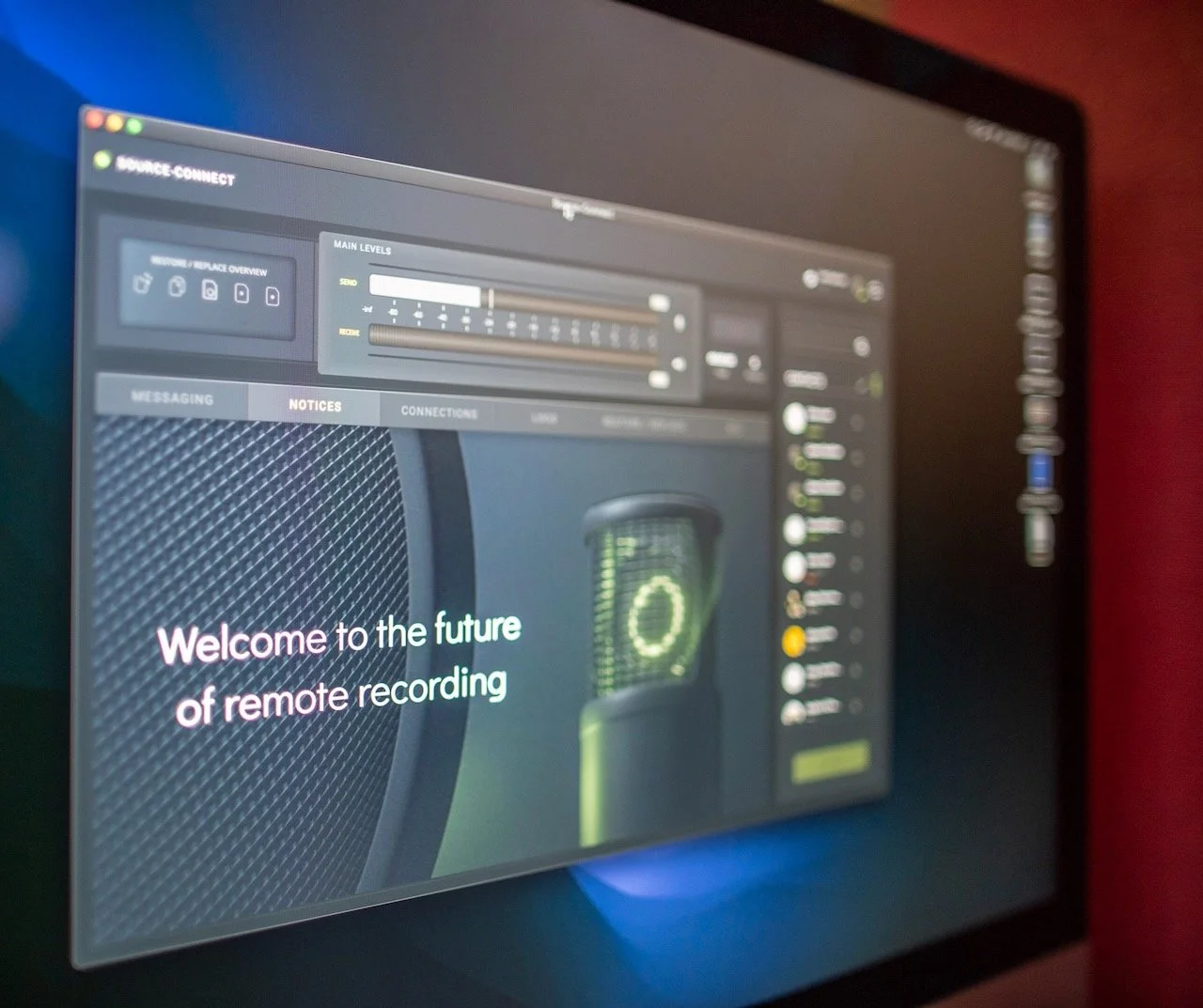
The phrase "remote recording" still carries, for some people, a faint suggestion of second best. A video call with a microphone plugged in and a file bounced across the internet. That version of remote recording existed a few years ago, and it was not great. It is certainly not the version that exists now.
How the Technology Has Changed
The professional standard for remote recording is Source Connect: a dedicated studio-grade platform built for the specific demands of broadcast audio. It is a low-latency, high-quality audio connection that lets our studio in Edinburgh run a session with talent in London, a director in Amsterdam, and a client listening in New York, simultaneously, with the same level of quality and creative control you would have in the room.
We also use Source Nexus, Cleanfeed, and ipDTL depending on the project and the setup at the other end. Whichever platform we use, the connectivity is professional and the quality ceiling is the same as in-person.
What Remote Recording Is Actually Good For
There are productions where in-person recording is the right call. A launch episode with a high-profile guest. A voiceover session where the director needs to be in the room to craft the performance. An ADR session with a complex cue list and a tight schedule.
But there are plenty of scenarios where remote recording is not just acceptable -- it is the better option. A voiceover artist based in a different city. A podcast guest who is available for a one-hour window. A client who wants to listen in without travelling. A director who needs a pickup line from talent who is already on their next project.
Remote recording handles all of these without the logistics, the travel costs, or the scheduling complexity of getting everyone into the same room.
What You Can Expect from a Session with Us
Our studio in Leith, Edinburgh is the fixed point. Everything else is flexible. We will connect to your talent wherever they are, provide monitoring and direction from the studio, and deliver broadcast-ready audio with the same quality control we apply to every session. And if you want to listen in remotely yourself, that is easy to arrange too.
The session runs like a session. It just happens to involve fewer flights.
If you are planning a project and wondering whether remote recording would work for your setup, contact us to discuss your project. It is one of the easier conversations we have.
Written by Max Howarth
Max is a producer and director at Red Facilities with over 30 years of experience in audio post-production. He has been running remote sessions long enough to remember when the technology genuinely was a compromise -- and to appreciate how completely that has changed.