What Is ADR? And Why Experience Is Everything
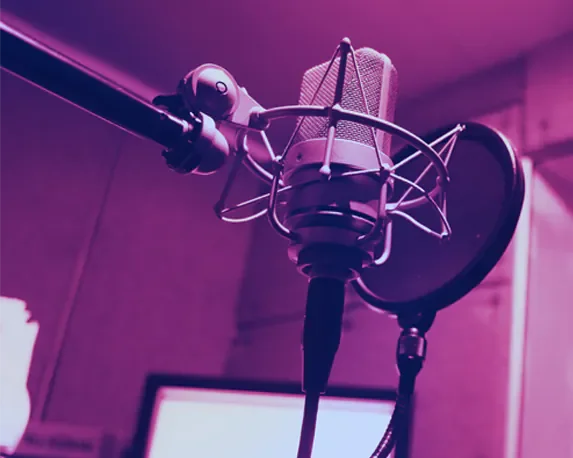
If you’ve ever watched a film or television drama and wondered why the dialogue sounds so clear while the characters are supposedly standing in a busy street or a howling windstorm, the answer is probably ADR.
ADR stands for Automated Dialogue Replacement, sometimes called looping. It is the post-production process of re-recording dialogue in a controlled studio environment to replace or supplement audio that was captured on set.
It is a standard part of professional post-production. But not all ADR studios are the same, and the difference between a session that delivers and one that doesn’t almost always comes down to experience.
What Actually Happens During an ADR Session
On a film or television set, location sound is rarely perfect. A passing siren. Wind across a microphone. A plane overhead at exactly the wrong moment. An actor delivering the performance of their career, but just slightly too quietly.
ADR fixes all of that.
The original scene plays on a screen in the studio, usually with visual cues or guide beeps to help the actor. They watch their own performance and repeat the lines, matching the timing, emotion, and lip movements as closely as possible. The engineer records multiple passes, and the dubbing mixer then blends the best takes into the final soundtrack so that the replacement audio sounds exactly as if it was recorded on location.
When ADR is done well, you never notice it. The performance is seamless, the dialogue sits inside the mix, and the scene plays exactly as intended.
When it is done poorly, something feels wrong. The dialogue sits on top of the mix rather than inside it. The audience may not be able to say why, but they feel the disconnection. That difference is down to the experience of the people in the room.
What a Professional ADR Studio Actually Provides
The technical requirements for a proper ADR session go well beyond a quiet room and a good microphone. You need video reference with timecode so the actor can sync to their original performance. You need low-latency monitoring so they can hear the scene without distracting delays. You need a high-quality signal chain that matches or exceeds the quality of the production audio. And increasingly, you need robust remote connection capabilities so that directors and producers can direct the session from wherever they happen to be.
All of that can be built and bought. What cannot be bought is the experience to run those sessions efficiently, to recover a performance that an actor delivered six months ago in different circumstances, and to deliver audio that passes broadcast quality control on the first attempt.
Why 25 Years Makes a Difference
Red Facilities has been providing ADR recording services in Edinburgh for over 25 years, working with broadcasters including the BBC, ITV, and Channel 4, as well as feature film productions and independent filmmakers.
That length of experience changes how a session runs.
An experienced ADR engineer understands that matching lip movements is only part of the job. The harder challenge is matching emotional continuity. An actor who delivered a line in a single raw breath on set may be in a completely different headspace in the studio three months later. Knowing when to push, when to give space, when to take another pass, and when to move on is something that comes from years of working with actors across all kinds of productions.
It also means working at broadcast speed. Post-production schedules are rarely generous, and there is no room for sessions that run long or technical problems that delay delivery. After 25 years working to broadcaster specifications, our engineers know exactly how to run an efficient session and how to deliver audio that clears QC without revision.
Remote ADR Sessions
Many productions now require remote ADR, with directors in London, actors in Edinburgh, and producers dialling in from elsewhere entirely. We have been running Source Connect remote sessions for years, well before it became standard practice in the industry.
We set up the connection, test the feeds, and make sure your director has a full talkback and monitoring feed so they can hear every take and communicate with the actor in real time, exactly as if they were in the control room.
Productions We Work With
Our ADR services cover a wide range of production types. For returning television dramas and continuing series, we handle regular ADR sessions for principal cast, often on tight turnaround schedules. For feature film, we record principal ADR, loop group sessions, and background dialogue replacement. For documentary and factual productions, we handle interview replacement, narration pickups, and presenter re-records. For independent film, we provide the same technical rigour regardless of budget scale.
We deliver to all major broadcaster specifications, including BBC, ITV, Channel 4, and Netflix, as well as standard Nuendo 15 projects, OMF and AAF exports, session Broadcast WAV files, or pretty much any format your dubbing mixer requires. Tell us your delivery spec at the point of booking and we’ll handle the rest. You can also find out more about our wider audio post-production services.
Do You Actually Need ADR?
Not every project requires it. If your production used a professional sound recordist and all location audio is clean and usable, you may not need ADR at all.
You are likely to need it if location sound was compromised by background noise, if a performance was technically or emotionally strong but the audio was not, if lines were changed or added after principal photography, or if you are producing a clean pass of dialogue for an international version or remaster.
If you’re unsure, we’re happy to review a sample of your location audio and advise honestly on whether ADR will benefit your production.
Book an ADR Session
If you have a project that needs ADR, whether it is a single scene or a full series, contact us to discuss your project. Let us know what you’re working on, your recording schedule, any remote connection requirements, and your technical delivery specifications. We will come back to you the same day with availability, an estimate and a clear plan.
Frequently Asked Questions
How long does an ADR session typically take?
For a single actor with 10 to 15 lines, allow 30 to 60 minutes. For loop group sessions or scenes with multiple characters, 2 to 3 hours is more typical.
Can a director direct remotely?
Yes. We use Source Connect to provide a full talkback and monitoring feed. Your director can hear every take in real time and communicate with the actor exactly as they would from the control room.
What delivery formats do you support?
We deliver to all major broadcaster specifications, including BBC, ITV, Channel 4, and Netflix, as well as Pro Tools sessions, WAV files, or any format your dubbing mixer requires.
Do you supply actors?
We provide the studio, the engineer, and the technical infrastructure. You supply the actors or voice artists. If you need guidance on voiceover casting for ADR and other projects, we can point you in the right direction.
How far in advance should I book?
For single-actor sessions we can often accommodate a few days notice. For loop group recordings or complex multi-character sessions, we recommend booking at least one week ahead.
Ready to Book?
Whether you are planning a full series ADR schedule or need to turn around a single scene quickly, we are ready to help. Contact us to discuss your project and we will come back to you the same day with availability, pricing, and a clear plan.
Written by Max Howarth
Max is a producer and director at Red Facilities with over 30 years of experience in audio post-production. Based in Edinburgh, he has worked across broadcast drama, feature film, documentary, and independent production throughout his career.